A data platformsized to your team.
We help you choose, build and govern a warehouse or lakehouse that fits what you actually need, not the largest thing on the market.

01Who it is for
The problems we are usually called about.
Technology and data leaders choosing a first platform, or wondering whether the one they have is still the right one.
A warehouse that has outgrown itself
Queries slow down, nightly jobs overrun and every new source makes it worse.
Too many places for data to live
A database here, a lake there, spreadsheets everywhere, and no single place anyone trusts.
A platform chosen by a sales pitch
The tool is capable, but nobody set it up for how your team actually works.
Costs nobody can explain
The monthly bill rises and it is not clear which workloads are responsible.
02What we do
Chosen for your needs, built to last.
Platform choice
An honest comparison of Databricks, Snowflake, Microsoft Fabric and others against your workloads and budget.
Platform build
Environments, storage layers, security and deployment set up properly from the start.
Governance and access
Who can see what, with lineage and audit history.
Cost management
Workloads sized and scheduled so spend is predictable.
03How it runs
Step by step.
- 01
Scoping call
We learn what you run today, who uses it and what you need it to do in two years.
- 02
Options and recommendation
We compare realistic choices against your workloads, skills and budget, and put the reasoning in writing.
- 03
Foundation build
Environments, storage layers, security and deployment are set up once and properly.
- 04
First workloads
A few valuable data sets are loaded and used, so the platform proves itself early.
- 05
Standards and handover
Naming, access and cost rules are documented and your team is trained to extend it.
04What you get
Delivered, documented, yours.
A written recommendation
With the reasoning, so the decision can be defended internally.
A working platform
With your first data sets loaded and in use.
Standards your team can follow
Naming, layering and access rules written down.
Tools we work with
Your stack, not ours
From our work
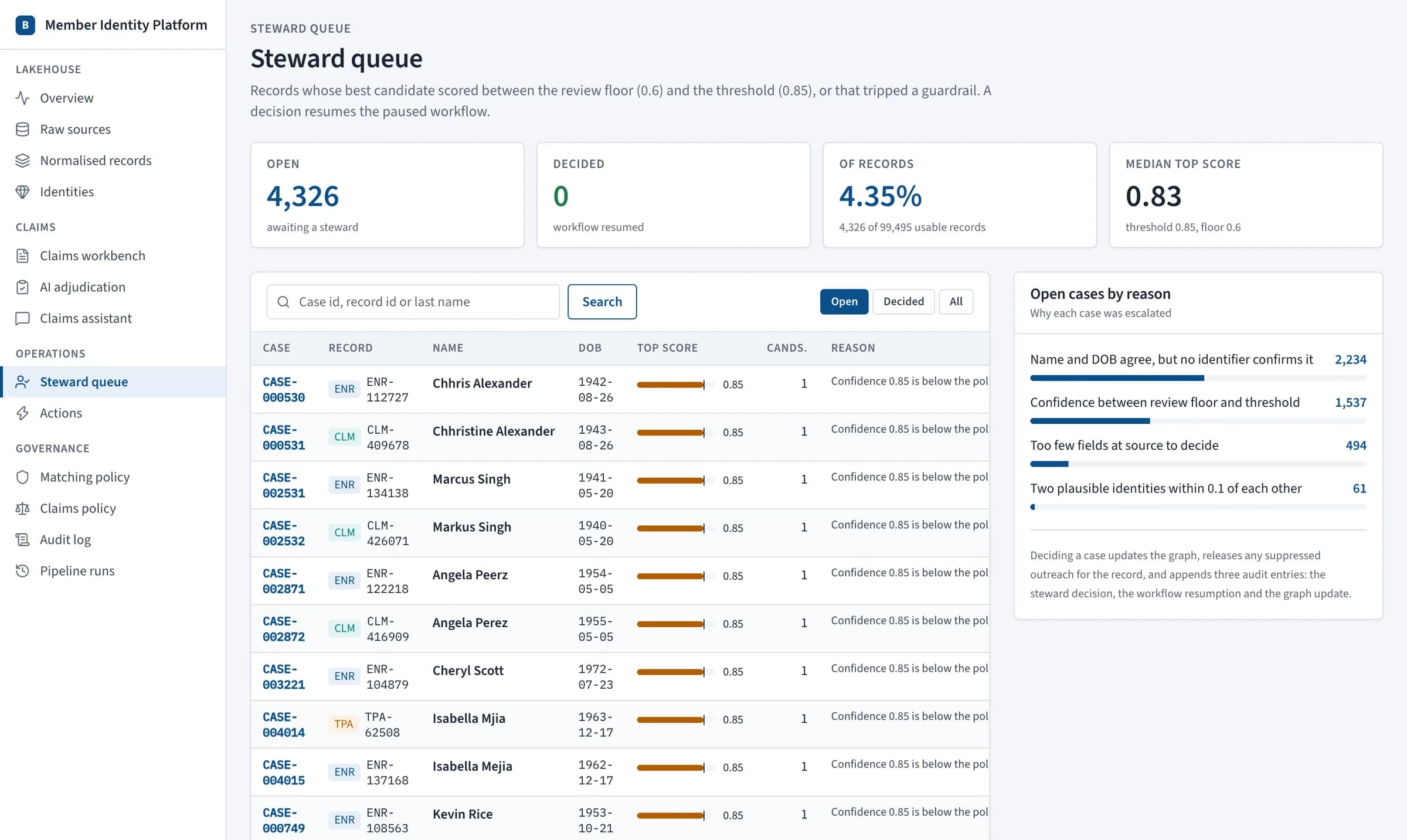
Member identity resolution
We matched 100,000 health-insurance member records from enrolment, claims and third-party files into single identities. Uncertain matches go to a reviewer, and every decision is logged.
Questions
What clients ask first.
Warehouse or lakehouse?
It depends on your data and your team. SQL-first teams with structured data are often well served by a warehouse. If you have large files, streaming or machine learning in view, a lakehouse usually earns its extra complexity.
Can we keep what we already have?
Often, yes. We look first at whether tuning and restructuring your current platform would solve the problem before recommending a move.
How do you keep the bill under control?
By sizing and scheduling workloads deliberately, separating environments, and giving you a view of what each team and job costs.
Who owns the platform when you finish?
You do. It runs in your cloud account, the code is in your repositories and the standards are written down.
How long does a platform build take?
It depends on scope. You get a written timeline and a fixed price after the scoping call, and working software from the first weeks.
Tell us what you run.
Thirty minutes with an engineer. You leave with a clear scope, a timeline and a recommended approach.