Move platformswithout losing a row.
We move data and workloads from legacy systems to modern platforms, and prove that what arrived matches what left.

01Who it is for
The problems we are usually called about.
Teams retiring a legacy warehouse, database or reporting system, who cannot afford for the numbers to change on the way across.
A legacy system at the end of its life
Support is ending, licences are expensive, or the last person who understood it is leaving.
Fear of losing data in the move
Nobody is sure what is in the old system, so nobody is sure what must come across.
Thousands of jobs and reports
Years of queries and scripts, many undocumented, some still critical and some long dead.
A previous migration that stalled
The easy tables moved. The hard ones are still where they were.
02What we do
Planned, parallel, proven.
Assessment and mapping
Every source table, job and report inventoried and mapped to its new home.
Conversion
Schemas, queries and jobs rewritten for the new platform.
Parallel running
Old and new systems run side by side until the results agree.
Cutover
A planned switch with a way back.
03How it runs
Step by step.
- 01
Scoping call
We establish what is moving, why, and what must not break.
- 02
Inventory and mapping
Every table, job and report is listed, classified as move, rebuild or retire, and mapped to its new home.
- 03
Convert and load
Schemas, queries and jobs are rewritten for the new platform and data is loaded in stages.
- 04
Run in parallel
Old and new run side by side while results are compared automatically.
- 05
Cut over and retire
The switch is planned with a way back, then the old system is switched off.
04What you get
Proof, not assurance.
A reconciliation report
Row counts, totals and samples compared between old and new.
Retired legacy systems
With the licences and servers that went with them.
Documentation of what moved
And of anything deliberately left behind.
Tools we work with
Your stack, not ours
From our work
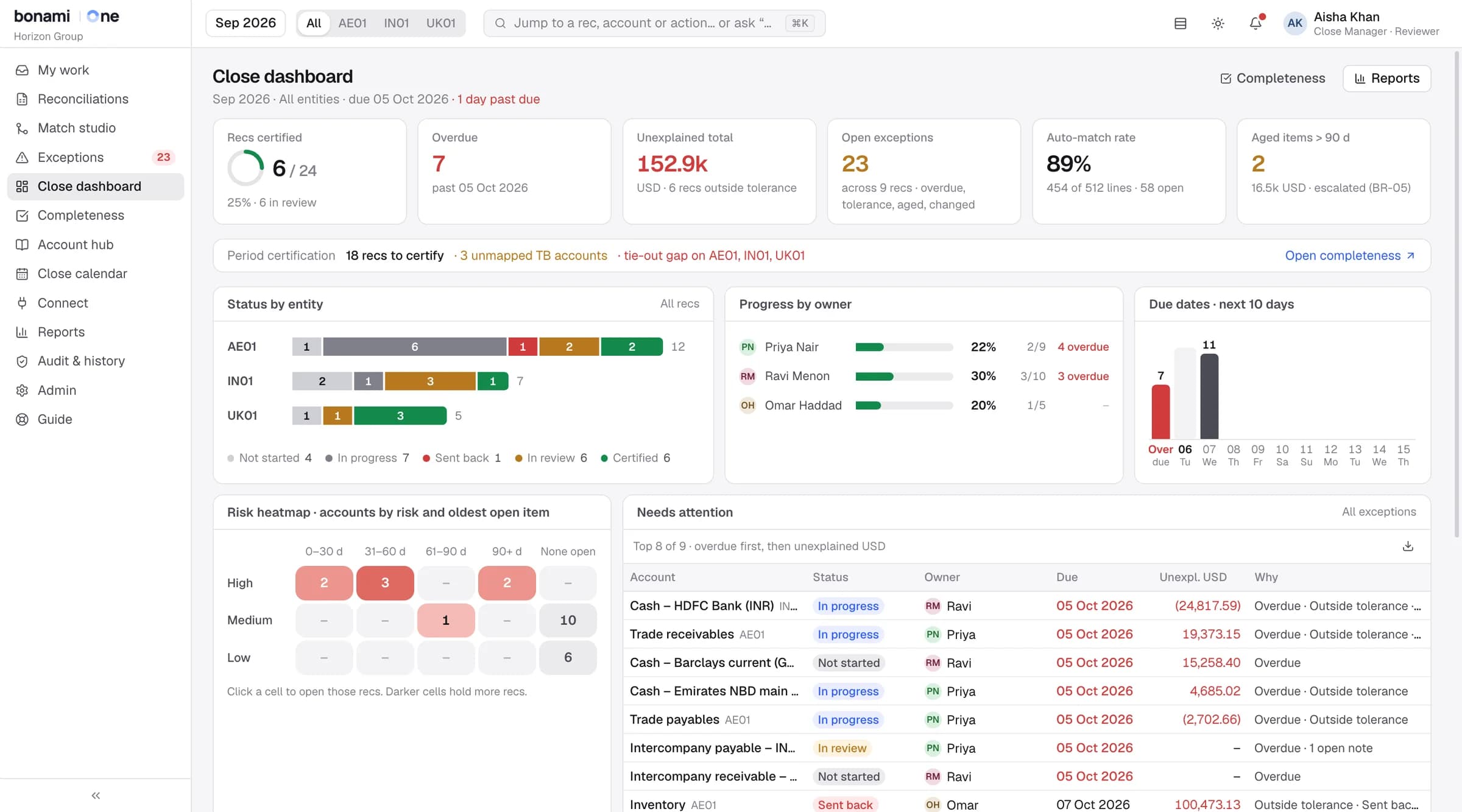
Account reconciliation platform
A month-end reconciliation platform for a finance team moving off spreadsheets. AI proposes the transaction matches; people review and sign off.
Questions
What clients ask first.
How do you prove nothing was lost?
With a reconciliation report: row counts, totals and sampled records compared between old and new for every table, with any difference explained.
Do we have to move everything?
No. Part of the work is deciding what to retire. Many migrations become cheaper once unused tables and reports are left behind.
Will there be downtime?
Parallel running means users keep working on the old system until the new one is proven. The final switch is planned for a quiet period.
What about reports built on the old system?
They are part of the inventory. Each is moved, rebuilt on the new platform or retired by agreement.
Can you rescue a migration that has stalled?
Yes. We start by measuring what has genuinely moved and what has not, then plan the remainder.
Tell us what you run.
Thirty minutes with an engineer. You leave with a clear scope, a timeline and a recommended approach.